
Credit: GALEX, JPL-Caltech, NASA
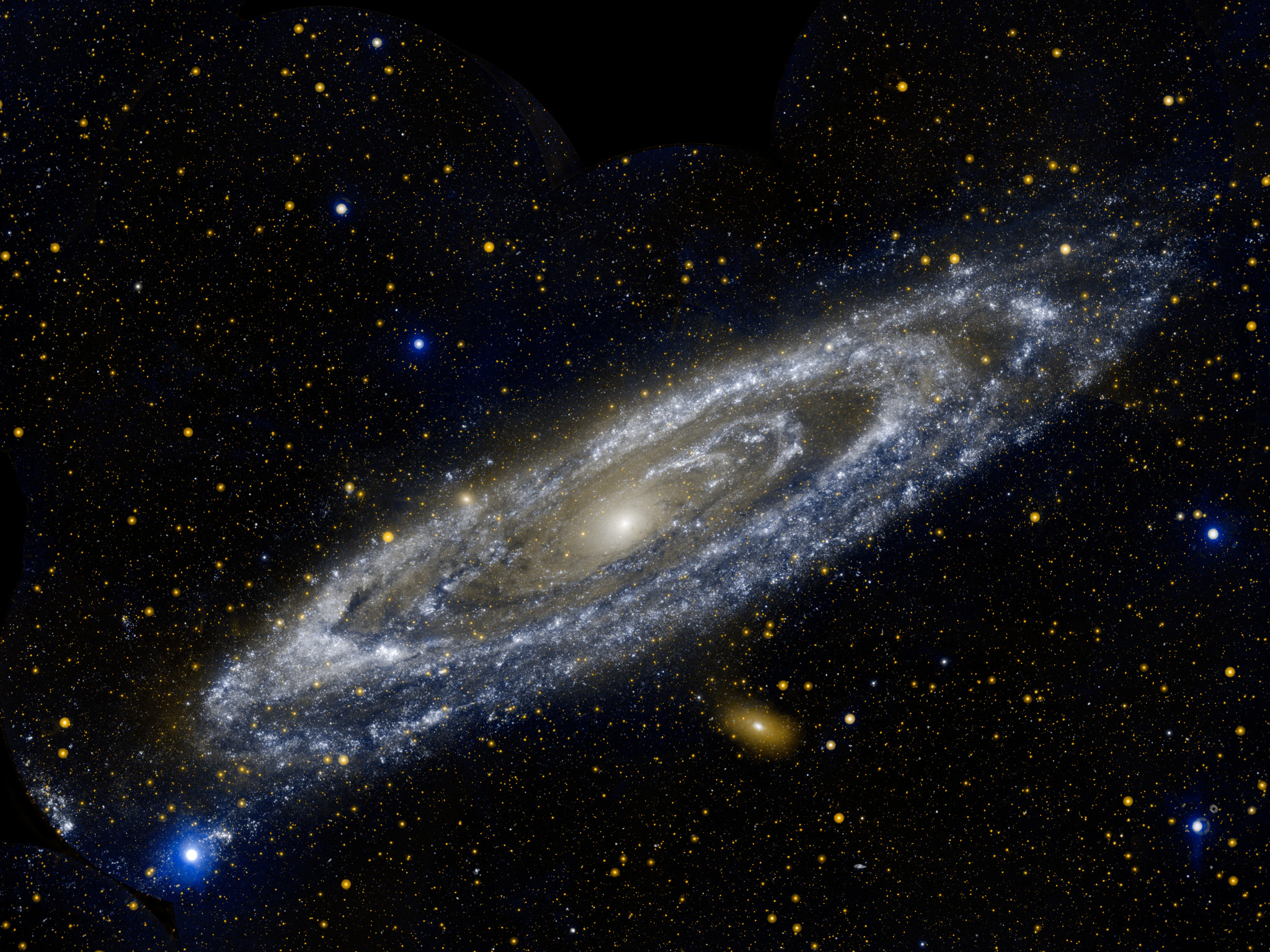
Explanation: A mere 2.5 million light-years away, the Andromeda Galaxy really is
just next door as large galaxies go.
So close, and spanning some 260,000 light-years, it took 11 different image fields from the
Galaxy Evolution Explorer (GALEX) satellite's telescope to produce this gorgeous portrait of the spiral galaxy in ultraviolet light. While its spiral arms
stand out in visible light images of Andromeda (also known as M31), the arms look more like rings in
the GALEX ultraviolet view, dominated by hot, young, massive stars. As sites of intense star formation, the rings have been interpreted as evidence Andromeda collided with its smaller neighboring elliptical galaxy M32 more than 200 million years ago. The large
Andromeda galaxy and our own Milky Way are the dominant members of the
local galaxy group.

Tidak ada komentar:
Posting Komentar